As admissions conversations resurface each year, a familiar question echoes across kitchen tables and parent group chats:
Is private school actually worth it?
It’s a question with layers, financial, emotional, academic, and in 2026, it feels more pressing than ever. Tuition has climbed steadily nationwide, and families are weighing not just the price of a private education, but its true value. What do students actually gain and what alternatives might create the same (or better) outcomes with a more personalized touch?
To answer this, we have to go beyond the usual pros and cons list. We have to look at the heart of the matter:
What does a child need to thrive, and what learning environment genuinely delivers that?
This is a story about cost, yes. But more importantly, it’s a story about fit, flexibility, and growth, and what families are choosing in 2026 to help their children flourish.
The Real Cost of Private School in 2026
For many families, the conversation begins with a number, one that has grown dramatically over the past decade.
In 2026, national averages place private school tuition roughly at:
- $15,000–$25,000 per year for most day schools
- $40,000–$65,000+ per year for elite or highly competitive independent schools
- $70,000–$90,000+ per year for boarding programs
These figures don’t include new-student fees, technology charges, class trips, uniforms, or the ubiquitous fundraising expectations that quietly follow enrollment. For a high-tier K–12 trajectory, the total investment can rival that of college.
Still, families often consider private school because cost alone doesn’t tell the full story. Parents are not buying a product; they’re investing in possibility, smaller classes, caring teachers, enriched academics, a sense of belonging. They’re looking for the environment where their child will feel known.
But price and value are not the same. And that’s where the conversation gets interesting.
What Private Schools Do Exceptionally Well
When parents talk about what they hope private school will offer, the words come quickly: individual attention, community, enriched learning, emotional support, better communication.
Private schools often shine in several areas:
- Smaller student–teacher ratios, allowing for more attentive instruction
- Community culture, where relationships and social-emotional learning are prioritized
- Specialized programs, from arts to robotics to global studies
- More responsive decision-making, especially around curriculum and discipline
In an ideal scenario, a child joins a learning ecosystem that feels intentionally built for them, structured yet warm, challenging yet supportive.
When this alignment is right, the experience can be transformational.
But behind every great private school story is a match: the right student, the right school, at the right moment.
And for many families, the calculus is changing.
The Hidden Truth: Personalization Matters More Than the Setting
Here’s the quiet shift happening in 2026: Parents are increasingly realizing that the setting (public, private, hybrid, homeschool) matters far less than the level of personalization their child receives.
A bright, curious student who struggles with executive functioning needs targeted skills coaching, not simply smaller classes.
A child who feels invisible in a large school needs relational teaching, someone who can connect with them daily, not just a friendly environment in theory.
A high-achieving teen aiming for competitive colleges doesn’t necessarily need a brand-name school, they need instructors who know how to stretch them meaningfully.
Families are beginning to ask:
If personalization is the key, is private school the only, or the best way to get it?
Increasingly, the answer is: not always.
A More Nuanced Value Analysis: Classroom Size vs. Individualized Growth
Let’s imagine two investments:
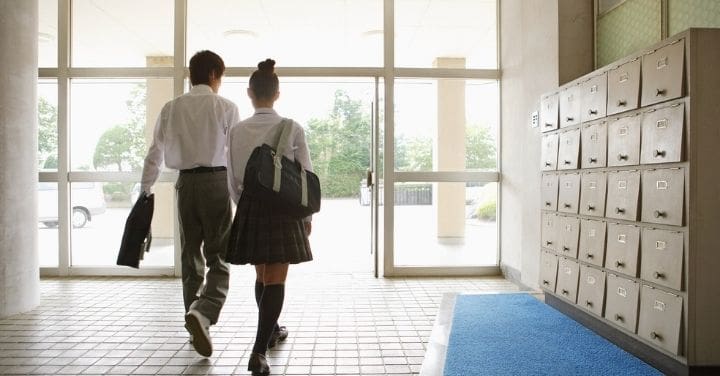
Investment A: An elite private school
$50,000/year
- Classes of 12–18 students
- Excellent faculty
- Strong college counseling
- A beautiful campus
- Community traditions
- A generally attentive environment
- Some individualized support, depending on the school’s structure
Investment B: A personalized, 1-on-1 academic model
$5,000–$15,000/year (depending on amount of instruction)
- A handpicked educator focused solely on your child
- Instruction tailored to strengths, learning style, pace, and goals
- Immediate feedback and measurable growth
- Flexibility around school, sports, travel, and health needs
- Consistent communication with parents
- A relationship-driven approach that adjusts as a child develops
The contrast is not meant to diminish what private schools offer, many deliver extraordinary learning experiences. Instead, it shows a shift in thinking:
Private school is an environment. 1-on-1 instruction is a strategy.
One is about the world around the child; the other is about the world being built for the child.
Families are recognizing that personalized learning, delivered by an expert educator, can produce academic and emotional growth that rivals, or exceeds the benefits of a private school classroom.
And importantly: it’s scalable. You can add support during transition years. You can pull back when a child is blooming independently. You can customize without uprooting your entire educational ecosystem.
This flexibility is often what families describe as the missing piece in both public and private settings.
When Private School Is Absolutely Worth It
Private school can be a remarkable fit when:
- Your child craves a tight-knit community and thrives socially.
- They are energized by collaborative learning and hands-on programs.
- The school offers a specific track, language immersion, arts conservatory, STEM focus that matches their passions.
- Your family values the culture, rhythm, and traditions that define the school experience.
Many students flourish in this environment. They form lifelong friendships. They feel seen, supported, and inspired. Tuition becomes not just a cost, but a story of belonging.
When the alignment is right, private school can be one of the most meaningful investments a parent makes.
The challenge comes when that alignment isn’t quite there.
When to Consider an Alternative
Not because private school is “bad,” but because your child needs something different, something more customized, flexible, or personal.
Families often begin exploring alternatives when they realize that even a smaller class still isn’t small enough for their child’s learning profile. Some discover they’re paying for a wide range of enrichment programs their child doesn’t actually use, which can make the investment feel mismatched to their needs. For other families, anxiety, ADHD, or learning differences require the kind of steady, 1-on-1 support that a traditional classroom, no matter how well-resourced, simply can’t deliver.
There are also the bright but unmotivated students who need encouragement, coaching, and accountability more than another curriculum map. And sometimes the school itself is strong, yet the fit feels just a little off, like a shoe that’s beautiful but not quite comfortable. Parents may even find that tuition is stretching the family in ways that don’t feel fully aligned with the growth they hoped to see.
These are the moments many parents reach out to us at Thrive Education Partners, not because school has “failed,” but because their child needs something more intentional.
We offer a boutique, relationship-driven approach where expert educators work 1-on-1 with students to build confidence, mastery, and momentum. It’s learning without the noise, personalized instruction that grows alongside your child.
Our families often tell us:
“This is the support I hoped private school would provide but now it’s truly tailored to my child.”
Some choose 1-on-1 instruction in addition to school. Others use it as a full alternative for a season—during a transition year, an academic reset, or a period of accelerated growth.
The common thread is simple: They want learning that fits.
A Better Question for 2026
Maybe the question isn’t “Is private school worth it?”
Maybe it’s:
“What environment, and what relationships, help my child learn with confidence and joy?”
For some families, that answer is a private school where their child is nurtured and challenged. For others, the answer is a more customized model, one that adapts to their child rather than asking their child to adapt to a system.
Either way, the goal is the same: growth that feels meaningful, measurable, and deeply personal.
Because at the end of the day, families are not searching for prestige or perfection. They’re searching for the place where their child lights up again where learning feels possible, connected, and full of promise.
At Thrive, we believe the right teacher can change everything. And whether you choose private school, personalized instruction, or a thoughtful blend of both, your child’s education is ultimately about one thing:
Helping them become the most confident version of themselves.