Most parents begin their school search believing they’re choosing between two paths: public or private. It feels like the classic fork in the road—one lined with neighborhood campuses and yellow buses, the other with uniforms, curated class sizes, and tuition statements. But over the past decade, a third path has quietly emerged, reshaping how families think about education altogether. It’s more intimate, more responsive, and surprisingly more attainable than many assume.
This third path, the Bespoke Model, built around a private educator working 1:1 or in very small groups, invites an entirely different conversation. It challenges the idea that school must be a place rather than an experience. And it asks a bold, refreshing question:
What if learning were designed around one child instead of many?
Before we step into that space, it helps to ground ourselves in what public and private schools do well, where they fall short, and why so many families are reimagining what “school” can be.
The Traditional Path: Public School
Public school is the backbone of American education, free, accessible, woven into the fabric of community life. For many children, it’s where friendships are formed, interests are sparked, and teachers work tirelessly within complex systems to reach as many students as possible.
But public schools also operate with unavoidable constraints. Class sizes often stretch into the high twenties or beyond. Curricula must align with state requirements, leaving little room for pacing flexibility or deep dives into a student’s passions. Teachers, no matter how extraordinary, juggle wide learning ranges and diverse needs within a single classroom.
For some children, this structure works beautifully; they thrive within the energy, routine, and social rhythm. But for others, those who need acceleration, additional support, or simply more individualized attention, the system can feel overwhelming or impersonal. Parents often describe a sense of being “on their own” when it comes to tracking progress or securing accommodations.
Public school remains a cornerstone of our society, but it isn’t designed to be customizable.
The Independent Option: Private School
Private schools offer a different promise: smaller classes, specialized programs, thoughtfully chosen curricula, and a community shaped around shared philosophies. Families often choose private education for its emphasis on character development, academic rigor, individualized guidance, or a particular pedagogical approach, Montessori, classical, progressive, faith-based, and more.
Private schools can be transformative. A gifted humanities student might flourish in seminar-style discussions. A child who needs more structure might benefit from consistent routines and lower student-teacher ratios. The community often feels tightly knit, with strong parent-teacher partnerships and a clear educational mission.
Yet private schools also carry limitations parents rarely discuss openly. Despite smaller classes, they’re still group-based. Even a class of 12 or 15 can’t offer true one-on-one instruction daily. The curriculum, while thoughtfully chosen, must still serve the whole class, not the unique learning arc of a single child. And the cost, even for well-resourced families, can be significant.
Perhaps the most common frustration parents express is this: “I chose private school for personalization, but I still feel like my child is one of many.”
The Third Path: The Bespoke Model (A Private Educator)
This is where something entirely different enters the conversation.
The Bespoke Model, working with a dedicated private educator, reimagines how learning happens. Instead of a classroom with 20 students or even a curated group of 10, the model revolves around one child, one educator, and one fully personalized plan. It’s a relationship-first, deeply tailored approach that blends academic instruction, mentorship, executive-function coaching, and emotional support in a way traditional schools simply cannot.
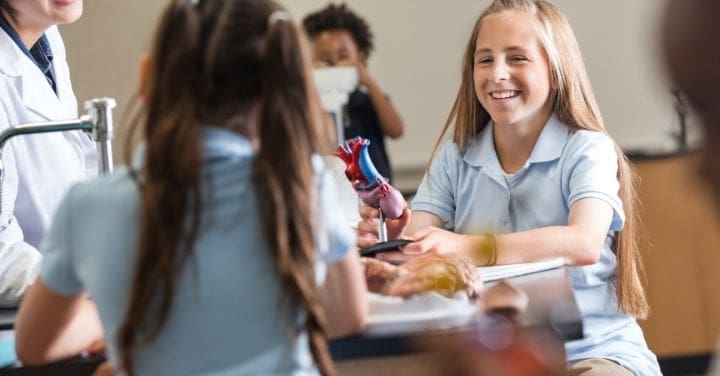
A private educator learns a student the way a great doctor learns a patient or a trusted coach reads an athlete. They observe how a child thinks, when they concentrate best, what sparks motivation, what triggers frustration, and how to build confidence steadily over time. Instruction becomes a living, breathing experience that changes as the child grows.
Parents often describe it as finally feeling like someone is “holding the whole child”, their strengths, their challenges, their quirks, their hopes.
And unlike the stereotype of exclusive homeschooling tutors available only to the ultra-wealthy, today’s private educators work with families across a wide range of needs and schedules: from supplemental after-school sessions to micro-schooling pods to full-time personalized instruction. The model is more flexible, and more accessible, than many realize.
Where the Models Diverge
The differences between public, private, and the Bespoke Model are more than structural; they’re philosophical. They reflect what each system is built to prioritize.
Below is a parent-friendly comparison that captures how each educational path functions in practice:
A Clear Comparison at a Glance
| Category | Public School | Private School | Bespoke Model (Private Educator) |
| Flexibility | Low — Schedules, pacing, and curriculum are largely fixed across the district. | Moderate — Some curricular and pacing flexibility, but still class-based. | High — Fully adaptable schedule, pacing, and learning environment based on the child. |
| Personalization | Limited — Teachers support many students with wide learning ranges. | Improved — Smaller classes allow more attention but not individualized daily instruction. | Exceptional — One-on-one or micro-group learning tailored to how the child learns best. |
| Curriculum | State-mandated, standardized across grades. | Mission-driven, may include specialized programs or unique philosophies. | Custom-built, blending state standards with the child’s interests, strengths, and goals. |
| Cost | Free | High tuition, typically five figures annually | Varies widely — often comparable to or less than private school when customized for needs. |
| Teacher-Student Relationship | Teacher divides attention among large groups. | Stronger relationships but still class-based. | Deep, consistent, mentorship-level relationship. |
| Progress Tracking | Periodic assessments and report cards. | More intentional feedback cycles. | Continuous, real-time insights with measurable growth. |
Why So Many Families Are Choosing the Bespoke Model
Parents aren’t choosing private educators because they want to abandon the idea of school. They’re choosing it because they want education to feel more human, more connected, more responsive, more aligned with who their child is capable of becoming.
Here are the themes families mention again and again:
- Confidence becomes the heartbeat of learning.
When a child works one-on-one with an expert educator who truly sees them, confidence grows quickly. Mistakes become information rather than embarrassment. Success feels earned rather than lucky. This confidence carries into every subject, every classroom, every year that follows.
- Progress is steady and measurable.
Teachers can pivot on the spot, slowing down for deeper understanding, accelerating when mastery appears, weaving in executive-function skills, or adjusting the schedule to support attention patterns.
- There is no “falling through the cracks.”
Private educators know exactly where a child is academically each day. Parents don’t have to wonder whether foundational skills were missed or whether enrichment could be offered, they see it happening in real time.
- Learning becomes joyful again.
Children feel successful when instruction fits them. When they grow, stretch, and see their own progress, learning becomes something they look forward to, not endure.
A Reframed Conversation (and a More Empowered Parent)
The most freeing part of understanding these three models is recognizing that the decision is not about choosing the “best” school universally, it’s about choosing the best fit for your actual child.
Some students blossom in large, vibrant public schools. Others crave the structure and community of a private school. And many, more than ever before, need personalized instruction that doesn’t exist in a traditional classroom.
The Bespoke Model doesn’t replace public or private education. It extends the possibilities, offering something that fills the gaps left by both. For families who want a truly tailored experience, built around confidence, growth, and meaningful relationships, it may be the solution they didn’t know existed.
In the end, the debate isn’t really public vs. private vs. private educator. It’s:
What kind of learning environment allows your child to thrive, not just academically, but as a whole human being?
For many families, the answer is becoming clear: a model where the right teacher, with the right relationship, can change everything.
 ;
;
;
;